Best Toys for 3 Year Old Boys
Choosing a gift for an energetic and curious little boy is both a pleasure and a challenge. Children at this age are in a critical stage of rapid development in imagination, motor skills and social skills. What you need is not just something that can keep them engaged for five minutes, but also a valuable companion that can stimulate their potential and support their development.
To find the best toys for 3-year-old boys, we combined insights from child development research and real parent reviews to create this ultimate toddler toy guide.
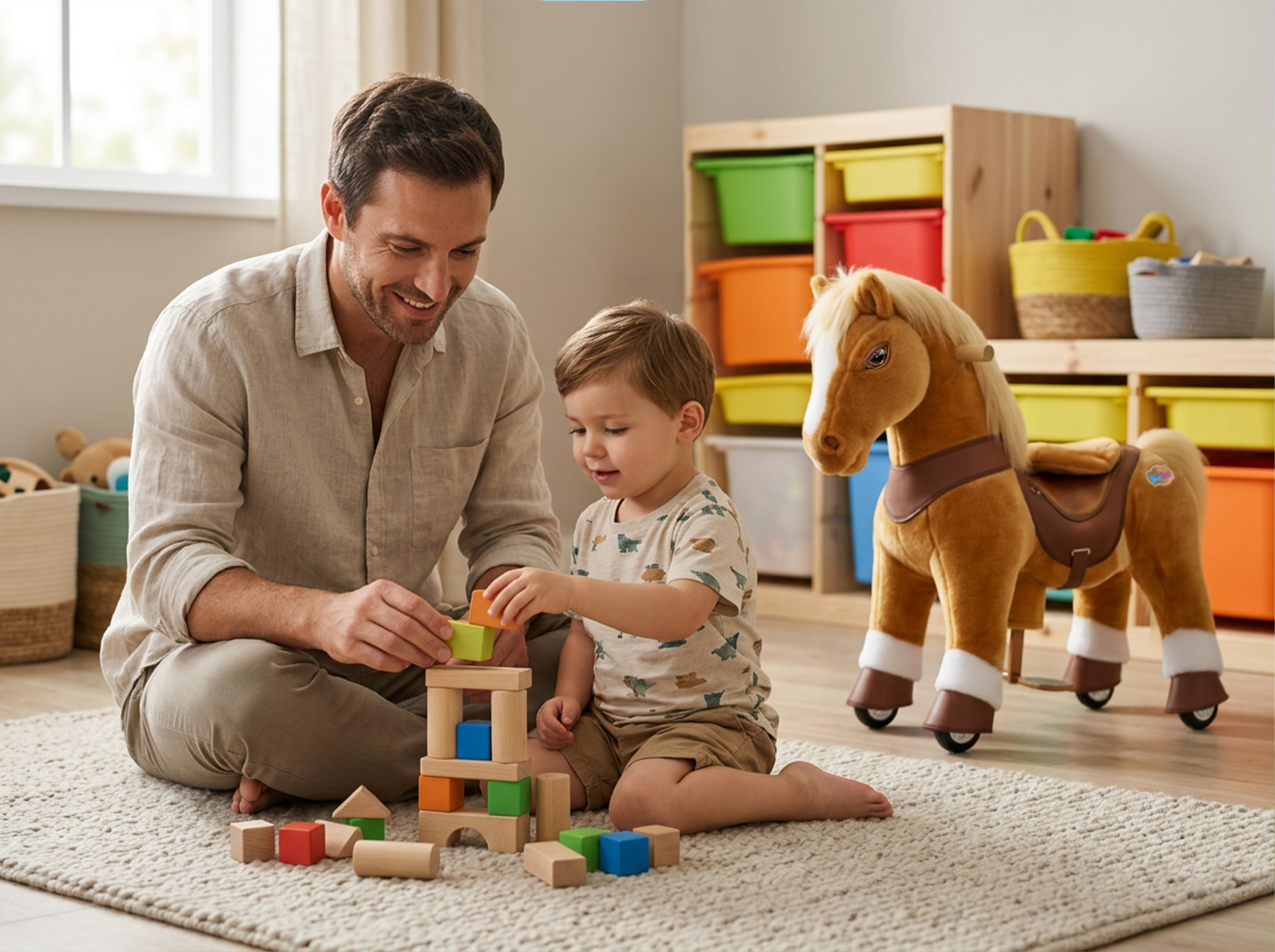
What Toys for 3-Year-Old Boys Should Parents Choose?
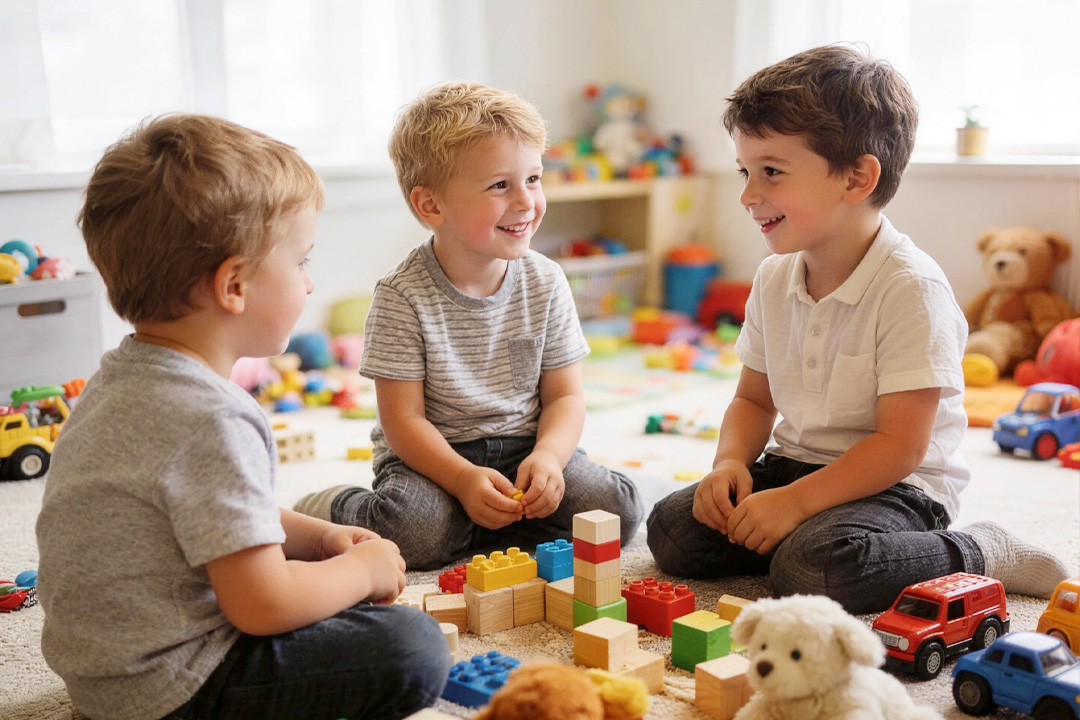
Before making a selection, it is crucial to understand the characteristics of children at this age. According to recommendations from the American Academy of Pediatrics, the age of 3 is a critical period for children to transition from “parallel play” to “interactive play”.
| Development Area | Typical Behaviors | Suitable Toddler Toys |
|---|---|---|
| Cognitive Development | Begins to understand cause-and-effect relationships and can complete 3–4-piece puzzles | Simple puzzles, matching games, cause-and-effect toys |
| Language Development | Rapid vocabulary growth; able to form 3–5 word sentences | Picture books, interactive talking toys, musical toys |
| Social & Emotional Development | Enjoys imitating adults and starts learning turn-taking | Role-play sets, play kitchens, tool benches |
| Fine Motor Skills | Can stack 6–9 blocks and turn book pages independently | Building blocks, lacing toys, art supplies |
| Gross Motor Skills | Able to run and jump; can ride a tricycle | Ride-on toys, balls, climbing structures |
Therefore, the best toys for 3-year-old boys should encourage cooperation, spark imagination, and support their natural desire for physical activity.

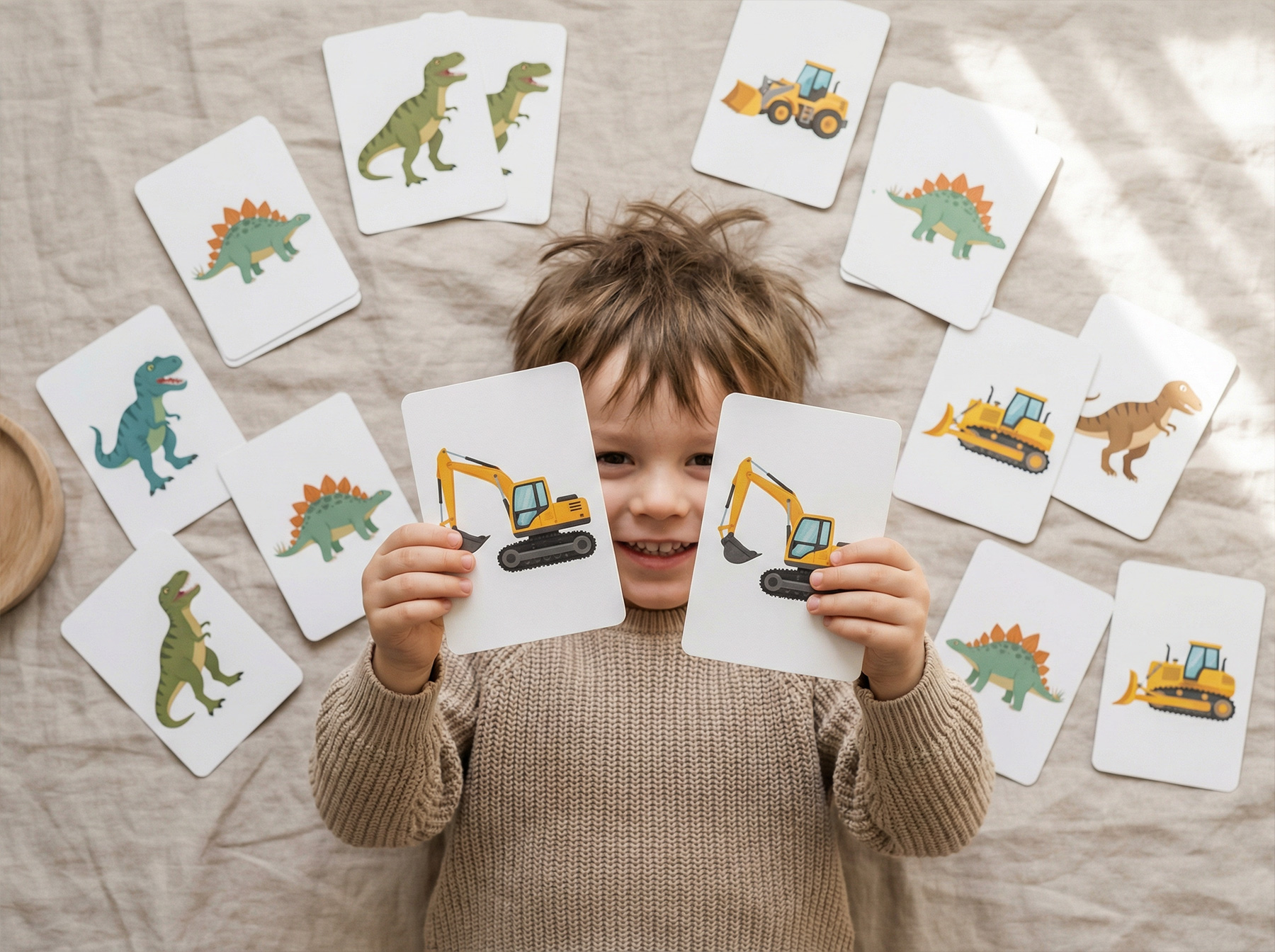
Cognitive Development: Matching Cards
The young mind of a 3-year-old is filled with curiosity about the world, and matching cards are an excellent toy to satisfy this curiosity. These games usually consist of dozens of thick and durable cards, each with matching pairs of images. During the game, children should place all the cards face down. Each time, they should flip over two cards and try to find the matching patterns in their memory.
If the cards feature their favorite dinosaurs, excavators, or fire engines, children will be more interested — through repeated recognition, their memory and understanding of their favorite things will be strengthened. This game can be played alone or with friends to naturally improve observation skills, concentration, and short-term memory. The cards are sturdy and portable, allowing them to be played anytime during travel.
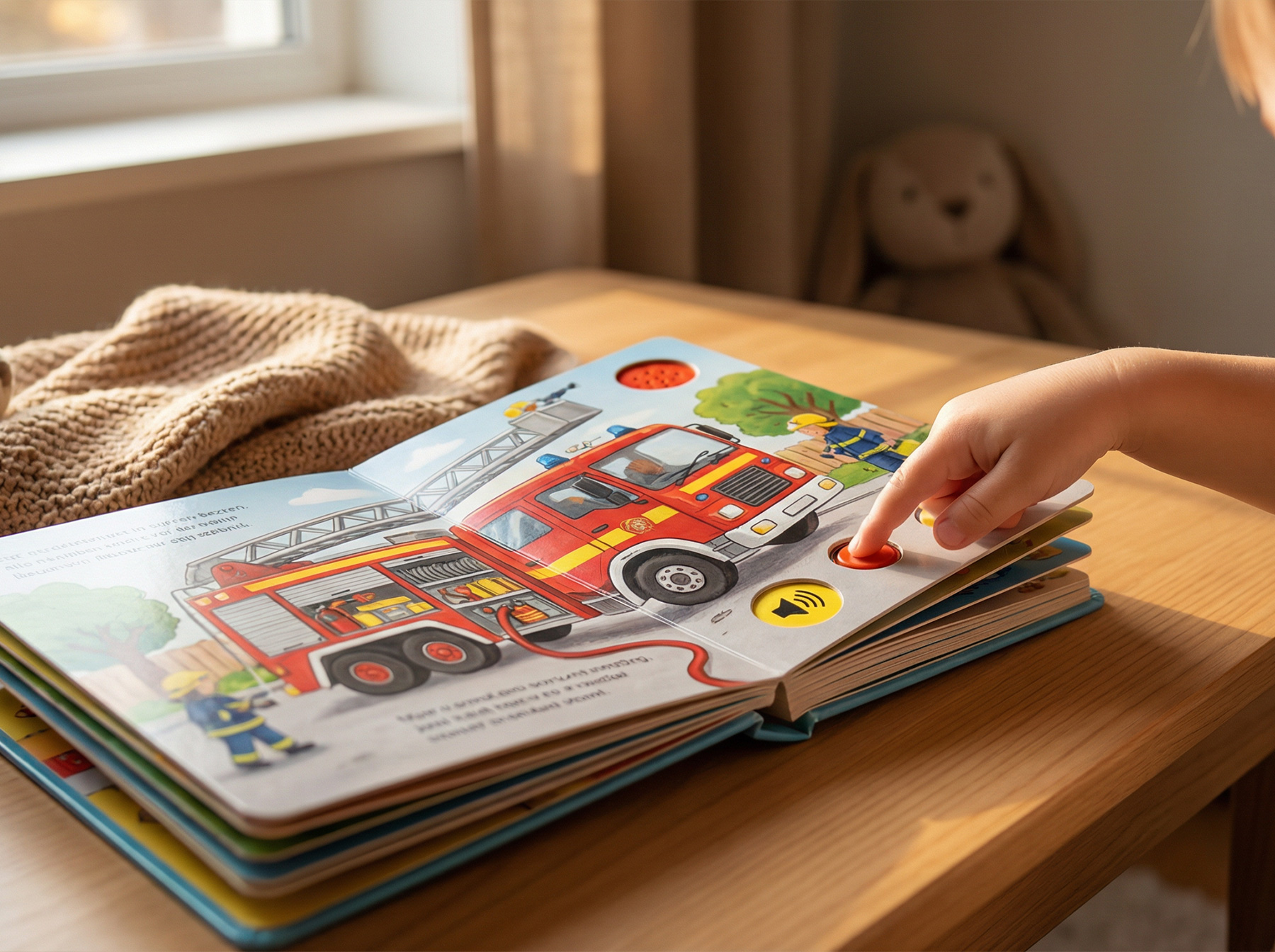
Language Development: Picture Books
Some 3-year-old boys are not interested in static storybooks. However, if you choose picture books that feature their favorite vehicles, the situation will be completely different. Each page of these picture books is a detailed depiction of an engineering vehicle or special vehicle, such as an excavator digging soil, a fire engine spraying streams of water, a tractor plowing the farm, and a garbage truck lifting trash cans. The pictures are rich in details, allowing children to immerse themselves in them.
Boys are naturally curious about moving and noisy machines. Many picture books are equipped with simple buttons that can make sounds when pressed, such as engine roars or horn sounds, which further stimulate their desire to imitate and express. Reading a few pages together before bedtime is not only a warm parent-child time but also a subtle language learning experience.
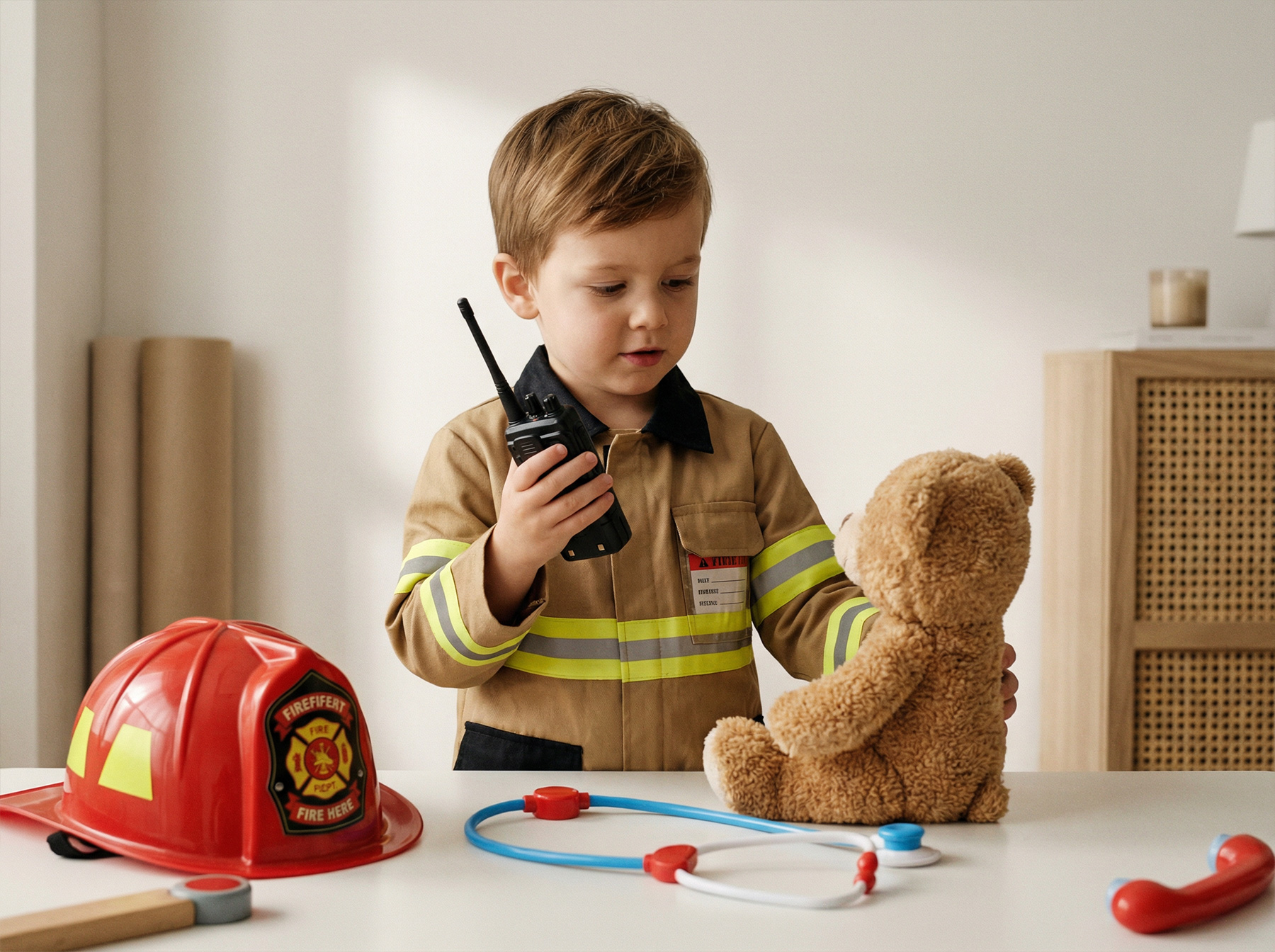
Social & Emotional Development: Role-Playing Sets
Children around the age of 3 start to become interested in “pretend games”, and role-playing sets provide the best props for this. These sets usually include a helmet or hat, a vest or uniform, and several iconic tools — walkie-talkies, binoculars, stethoscopes, flashlights, etc. The favorite themes for boys are often firefighters, police officers, construction workers, doctors, or astronauts.
The moment a child puts on the uniform, he enters a different identity. He might be a firefighter fighting the fire, rushing into the “fire scene” to rescue a toy; or he could be the foreman at a construction site, directing the imaginary excavator; or he might be a doctor, giving injections and medicine to the sick toy bear. This role-playing is not only a burst of imagination, but also an excellent way to learn social rules and emotional understanding.
Fine Motor Skills: Building with Blocks
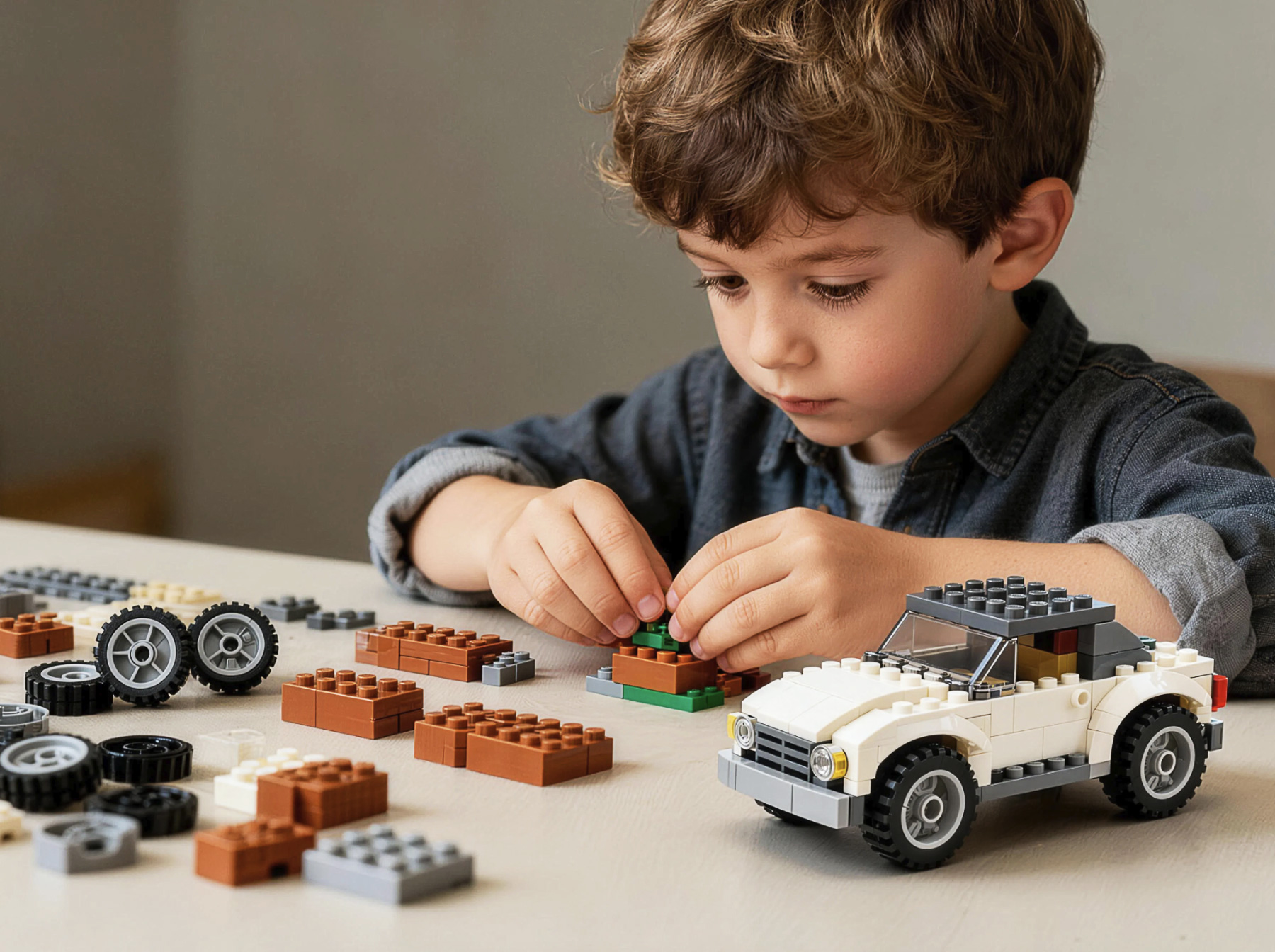
In every boy’s toy box, toy cars are the standard items. But if it’s a car built by himself, the significance is quite different. Building blocks include various colored blocks, wheels, windows and other accessories. Children need to use their imagination or refer to simple drawings to assemble them into cars, trucks or even robots.
For a 3-year-old’s small hands, the process of aligning the pieces and pressing down with force — this itself is exercising fine motor skills: the small muscles in the hands, hand-eye coordination, and the coordination of both hands. All of these skills are developed naturally. When the child finally builds a small car that can move, the sense of pride of “I made it myself” is enough to make him hold the car and run around the room. One after another, he gradually builds up a fleet of cars. These homemade cars can also be exchanged with friends to play with, or compete on the slide to see who runs faster. The open-ended gameplay not only develops manual skills but also ignites the spark of creativity.
Conclusion
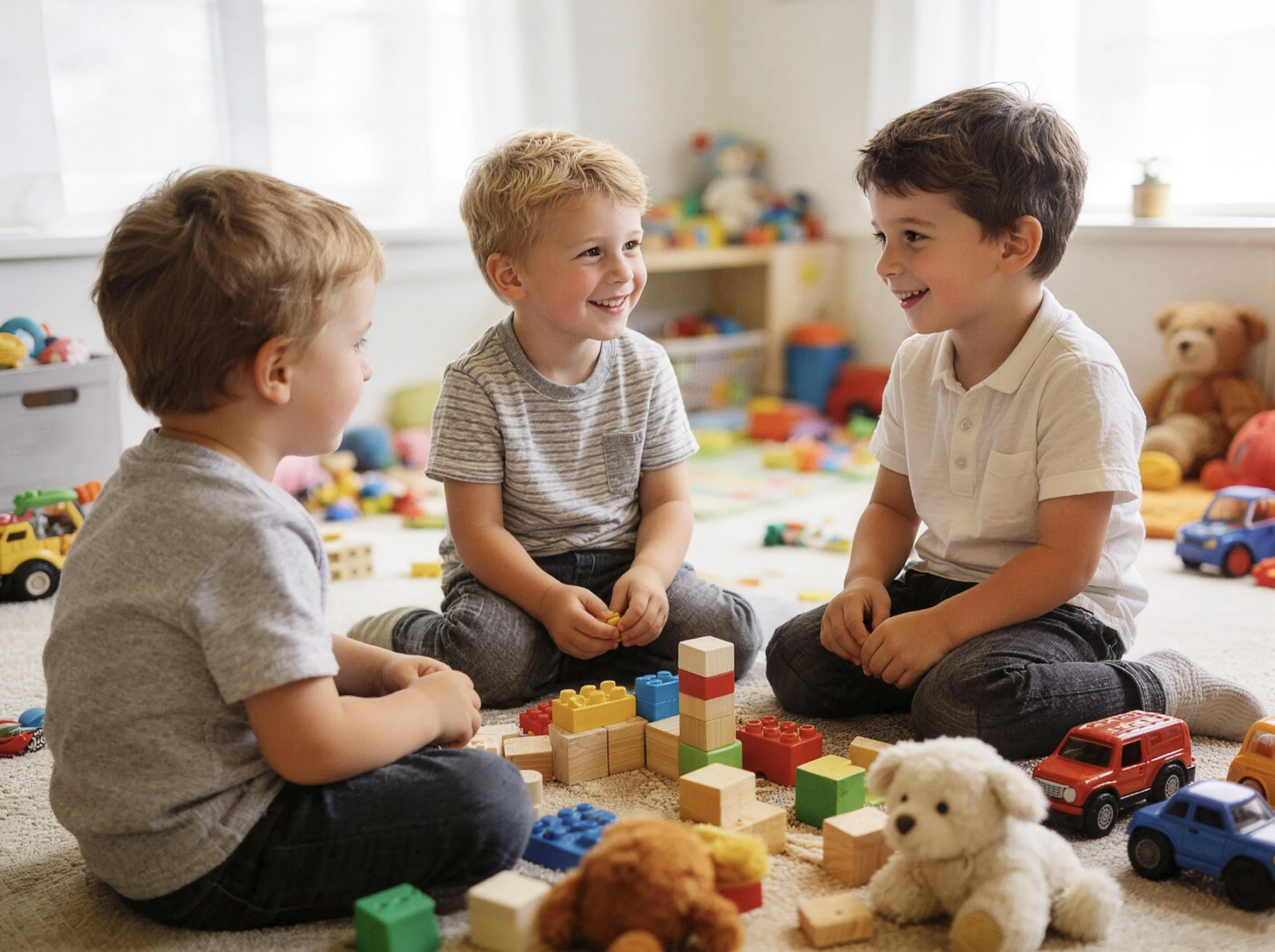
Choosing the right 3-year-old boy toys is not as simple as it seems. For children at this age, they change dramatically after just a few days — yesterday they were clumsily stacking things up high, today they have already built a castle; last week they were protecting their toys and wouldn’t let go, this week they have learned to negotiate with their friends to take turns being the leader. What they need is not just something that allows them to play quietly for a while, but a friend who can accompany them throughout their growth — witnessing every “Yesterday I couldn’t do it, but today I suddenly can” moment.
Shop More Gifts and Toys for Kids
Looking for more of the best toys for kids? Check out our guides for every age:
Gifts or toys for toddlers: Best Toys for 3 Year Old Girls | Top 10 Toys for 3-Year-Old Girls | Best Gifts for 3 Year Old Girls | Unique Gifts for 3 Year Olds Girls | Gifts for a Granddaughter by Age | Gift Ideas for a Horse-Loving Girl
FAQ
Where can PonyCycle® ride-on toys be ridden?
Any flat ground will do — flat indoor floors, sidewalks, or paved outdoor areas.
Do we need to buy all these types of toys for 3-year-old boys?
No. You don’t have to buy them all at once. First, see what the child is currently interested in, and choose one or two items that he really likes. Let him play with them thoroughly. When his interest changes, you can gradually add new ones. It’s better to buy one good toy than a bunch of mediocre ones.
Will the matching cards be too difficult for the children?
You can start with 4 pairs of cards. Once the children get familiar with it, you can add more. Children at this age don’t mind repetition. Failure is also part of learning to play. Parents can offer plenty of encouragement.
What should I do if a child skips pages when flipping through picture books?
It’s quite normal for a 3-year-old boy to be unable to sit still. Instead, let’s turn reading into a treasure hunt game: “Where did the excavator hide?” “Where is the ladder of the fire engine?” Or imitate the voices in the book to entertain him. Let him think that reading is fun, not just sitting there listening.
How long can these toys last?
The fun of a good toy for a 3-year-old boy actually “grows” over time: matching cards start by finding the same items, and later they can be used to tell stories or sort things; building blocks start by stacking high and eventually become castles.